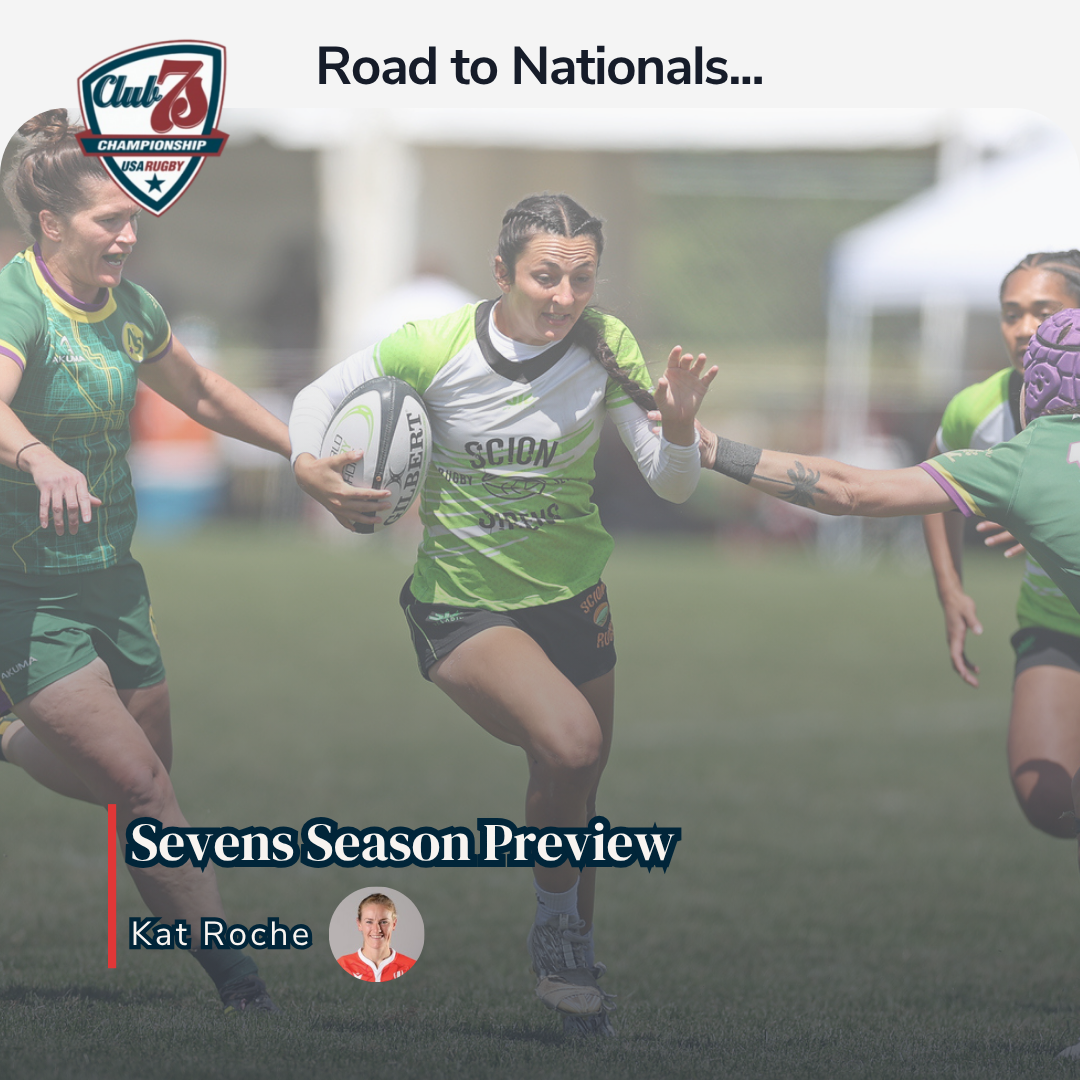
The temperatures are rising and the shorts are getting shorter, which can only mean one thing in USA Club Rugby… 7s is upon us. 7s rugby comes about at the best time of the year, it’s simply too hot to play 80 minute games, and the sun will scorch you if you don’t reapply sunblock every hour. Some clubs transition seamlessly into putting out 7s sides, while others look to specialized groups to pull players into completely different branding for the season.
All in all, it’s a lot to stay engaged with, and that’s why I’m here to walk you through it and keep you updated as the season progresses. First thing first, the disclaimer – I’m not getting information from RugbyXplorer, but I do still have my resources. I will say, the more up to date the tournament websites are, the better the information is. This being said, if I get something wrong – sorry! I’m always happy to take feedback and keep my information as up to date as possible, just shoot me an email. As for the extra commentary added, that’s just for fun, again – I’ve got no stake in the outcomes of these matches and tournaments, I’m just here for the rugby.
With that being said, let’s begin our preview for what this season will look like, and what teams are already putting their name in the hat for hardware down the line.
7s National Championship
If you’re brand new here, or maybe just curious about the history of 7s Nationals, let’s go all the way back to the start. The 7s Nationals Championship was first played back in November of 1985 and was (as you guessed it) Men’s only. It moved to the summer the next year and has remained in the summer ever since. The Women’s bracket was formally added in 2011, though there were a few years that the women played as invitational teams. The final tournament has taken place on all coasts, from Seattle to Philadelphia to Denver and Milwaukee and more. The tournament has typically been hosted in the northern half of the country due to the whole “summer” taking place in the south.
Who participates? Any club registered with USA Rugby is eligible to participate, as long as they adhere to the eligibility requirements (foreign versus domestic players, players having actually played with the club over the season, etc.). All things in place in order to promote fairness and equal competition.
What’s the value in 7s? A whole lot. First of all, it’s the only current version of rugby union featuring in the Olympic Games, which are at home in LA in 2028. But this is Club 7s, players from Club 7s don’t make it to the Olympics? Oh boy are you mistaken if you think that. Autumn LoCicero, Peter Sio Jr, Porter Goodrum are all Club 7s players who have made the transition to the National Team. And that’s recently. Club 7s Nationals has always been a key part of the player pathway, with the pride and joy of the USA representing their local clubs.
Qualifying Pathway
So, how do we get to Nationals? Great question! The country is split into eight competitive regions – Pacific Northwest, Pacific South, Rocky Mountain/Frontier, Texas/Red River, Midwest, Mid-Atlantic, Northeast, and South. Each competitive region hosts a number of 7s tournaments over the summer, with certain tournaments being identified as “Qualifiers”. Teams can participate in these Qualifiers and gain points based on final standing in order to win their region. At the end of the qualifiers, the top team (men’s and women’s) from each competitive region will automatically qualify for Nationals. So that’s eight slotted in. There will be another eight* at-large bids selected; factors in selection include – competitive schedule, competitive scorelines, historical performance, and intent to compete. So basically if you’ve competed in years past, did pretty well in your region, and have the funds to travel you are a much better candidate than a team who won one tournament but has never been heard from before, and failed to show up at the other qualifiers.
So how do I compete in my region? First things first, you have to sign up for local tournaments. Be sure to note which are qualifying tournaments, as those will gain you the points in order to compete for top in your region. Typically you don’t HAVE to compete at all qualifiers in your region, but the way the points stack up, most teams typically do. If at the end of the qualifying rounds you are the top seed, congratulations! If not, never fear, you can still apply as an at-large bid. Remember the selection factors noted above, the more you play and the better you do, the better chance you will be able to compete at Nationals.
*Final number of teams to be included depends on interest and quality of competition – it can change from year to year
The Playing Field
Okay okay, so we understand the tournament, we understand how to qualify, but who are we really up against? Ah, the competition. As I mentioned before, a few clubs play both XV and 7s under the same banner (looking at you Belmont Shore and NOVA). Some choose to only play XV and then have a separate local club for 7s (think Doylestown / Slaughterhouse). Others make completely different “select-side” teams for the summer (Scion or National Athletic Village). Whatever way you do it, it works.
Looking at the men’s side of the competition – the big headline is that National Athletic Village [NAV] is not returning for the 2025 season. After three-peating as National Champions, NAV looks to focus on elite select-side tournaments and building out their women’s program. A fantastic move for this program, and it leaves a massive space at the top of the National Men’s Competition that many will be vying to fill.
A few of the returning big dogs have already put their hands up and given interest in this year’s tournament including last year’s bronze medalists, the Denver Barbarians. 2024 Plate Champions Detroit Tradesmen also indicated interest, along with NY Old Blue, Life West, and Life U. Up in the Pacific Northwest we’ve already got Eastside Tsunami, the Oregon Sharks, and Seattle Barbarians joining WAC. No interest forms from the Red River region yet, but we can expect Dallas and the Austin Huns to put their hands up again. Fresh off their D2 National Championship, Atlanta Old White are going for the old two-fer. They’ll have to take on the Birmingham Vulcans and Nashville who are both coming from the True South.
This is just an initial interest list of course, so there are still plenty of teams who have not yet indicated interest (what are you waiting for?!) who will likely come to compete.
On the women’s side – Scion roared back onto the scene last year, claiming the crown after pulling out in 2023. They will be back in 2025 to defend their title. Second place Chicago Lions will also return, in hopes of snatching back the trophy they lifted in 2023.
Florida-based Phoenix Rugby will have to take on Fort Miami down in the sunshine state, as well as the Atlanta 2.0 Selects who are back. In the PNW it’s the Oregon Sharks and ORSU against last year’s bronze medalists WAC. Boston, Life West, and HEB Hurricanes are also all returning. Raleigh Venom are back in the mix, as they play in Mid-Atlantic for XV, it’s unsure whether they will hunt for a Mid-Atlantic bid or a South one. Again, this is a preliminary list, so still plenty of time to grab a team and put your hand up.
With all that said and done, there’s nothing left but to let the competition begin. We’ll keep you updated as the competition progresses, wrapping up in June and July before previewing our National Championship Tournament. According to the calendar, our first regions kicking off are the Pacific South and the Red River with Santa Monica 7s and Bloodfest 7s respectively. We’ll see you in June!


2 Comments